Aircon Gas Top Up
Singapore’s Most Reliable Aircon Gas Top-Up
Most companies don’t want you to know…that gas just doesn’t…disappear. Your aircon runs on a sealed refrigerant loop (R32 or R410A in newer units, R22 in older systems). If the gas level drops, there's a leak. Topping up without finding and fixing that leak wastes your money, because the gas escapes again within months, and you're paying for refills over and over. We don’t want you to waste your money. That’s why we always pressure-test first, locating the leak and repairing it before we add refrigerant.
Get in Touch Today
What's Included:
- Leak detection and pressure testing
- Post-service pressure verification
- R22 gas top-up (older units)
- Leak repair before refill
- R410A refrigerant refill
- R32 refrigerant refill
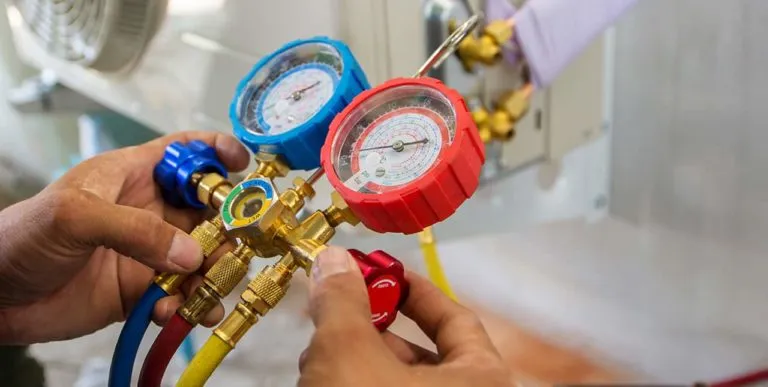
Our technician starts by attaching a manifold gauge to your system's service port to measure the current refrigerant pressure. If the pressure reading is normal, your cooling problem is unlikely to be caused by a gas leak. Instead, it might be due to dirty coils, a failing compressor, or blocked airflow. We tell you that. If the pressure is low, we use a leak detector (an electronic sensor that detects refrigerant traces) or a soap solution on joints and valves to locate where gas is escaping.
We’ll inspect the common (and uncommon) leak points, such as pipe connections at the outdoor unit, valve stems, and micro-cracks in the evaporator coil caused by corrosion. Once we locate the leak, we repair it by tightening connections, replacing faulty valves, and patching or replacing damaged sections. Then we vacuum the system (removes air and moisture that contaminates refrigerant), refill with the manufacturer-specified gas type and quantity, and retest pressure to confirm it holds.
We know that the refrigerant type matters a lot, which is why we check the label on your outdoor unit, verify system compatibility, and never mix types. Pricing depends on refrigerant cost (R22 is 2–3x more expensive than R410A due to phase-out) and amount needed (measured in pounds or kilograms).
We quote separately for the leak detection fee, leak repair cost, and refrigerant refill price. You approve each step before we proceed. Reach out to us if your unit isn't cooling, and we'll thoroughly test it to determine whether gas is actually the problem.
Features:
- Gas level inspection
- Refill with appropriate refrigerant (R22, R410A, or R32)
- Leak detection and pressure testing
- Cooling performance verification